
Swimming With Predators to Save Them
Ocean Ramsey is one of the most recognisable and controversial figures in modern marine conservation. A freediver, marine conservationist, and educator based in Hawaii, she is best known for swimming unprotected alongside some of the ocean’s most feared predators, including great white sharks and tiger sharks.
Michel Eganya
1/5/20263 min read
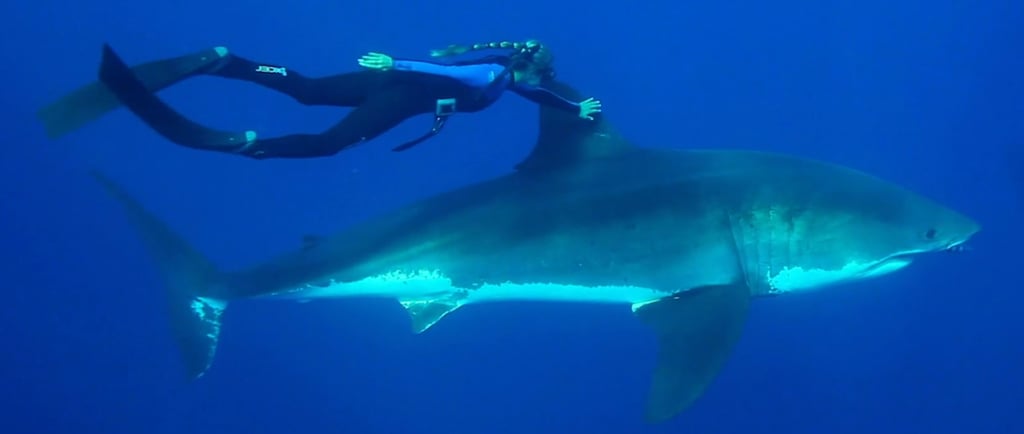

Ocean Ramsey
Swimming With Predators to Save Them
Ocean Ramsey is one of the most recognisable and controversial figures in modern marine conservation. A freediver, marine conservationist, and educator based in Hawaii, she is best known for swimming unprotected alongside some of the ocean’s most feared predators, including great white sharks and tiger sharks. Her work sits at the intersection of science, activism, and media, raising a central question for our time: can radical visibility change how we protect the natural world?
Raised in Hawaii, Ramsey grew up immersed in the ocean. She has often cited a childhood encounter with a shark as a formative moment, not one of fear, but of fascination. That early experience shaped a lifelong commitment to understanding sharks not as monsters, but as essential apex predators whose survival is directly tied to the health of marine ecosystems.
Ramsey pursued studies in marine science and animal behavior and later completed a doctorate in ethology. Rather than remaining in academia, she chose a field-based path, arguing that the urgency of shark conservation required direct action, public engagement, and faster communication than traditional research channels allowed.
Together with her partner, photographer Juan Oliphant, she co-founded One Ocean Diving and One Ocean Research in Hawaii. The projects combine scientific observation, public education, and guided ocean experiences designed to teach people how to safely and respectfully interact with sharks in their natural environment. Central to Ramsey’s approach is the belief that fear is one of the greatest threats to shark conservation. Species that inspire terror are easier to kill, ignore, or exploit.
Over the years, Ramsey has swum with more than 40 shark species across the globe. Her most widely known encounters involve great white sharks. In 2012, images of her swimming freely beside a large white shark went viral, challenging decades of popular culture shaped by films such as Jaws. A second viral moment followed in 2019, when Ramsey encountered an exceptionally large female great white shark off the coast of Hawaii, widely believed to be among the largest ever documented. The images circulated globally, reigniting public interest in shark protection and contributing to renewed momentum for conservation legislation.
In 2021, Hawaii became the first U.S. state to ban the intentional killing of sharks within its waters. Ramsey was one of several high-profile advocates supporting the legislation, using her platform to frame sharks not as threats, but as keystone species vital to ocean health.
Her work, however, has not been without criticism. Marine biologists and conservationists have raised ethical concerns about close physical interactions with wild apex predators. Critics argue that such imagery risks normalising dangerous behaviour, encouraging imitation by untrained individuals, and potentially stressing the animals themselves. Some scientists have publicly questioned whether the educational benefits outweigh the risks.
Ramsey has responded by emphasising that her interactions are informed by years of experience, situational awareness, and an understanding of shark behavior. She maintains that her intention is not to encourage imitation, but to shift perception. According to her, people protect what they empathise with, and empathy begins with visibility.
This tension between spectacle and stewardship is explored in the Netflix documentary Shark Whisperer, which examines both her conservation mission and the controversy surrounding her methods. The film does not offer simple answers, but instead reflects a broader dilemma in modern environmentalism: how far should communicators go to capture attention in an age of constant distraction?
Beyond media and controversy, Ramsey’s impact is tangible. She has educated thousands of students, supported marine protection initiatives, and helped reframe sharks in public discourse. Whether one agrees with her methods or not, her work has undeniably altered how millions of people see sharks and their role in the ocean.
Ocean Ramsey represents a new kind of conservationist: one operating in public view, navigating science, storytelling, and risk in equal measure. Her work forces an uncomfortable but necessary conversation about how we advocate for the natural world, and what responsibility comes with being seen.
SOURCES
Wikipedia – Ocean Ramsey
National Geographic interviews and features on shark conservation
The Guardian – Coverage on shark conservation and media ethics
Hakai Magazine – Critical analysis of shark interaction imagery
Infobae – Feature interviews on Ocean Ramsey’s conservation work
Netflix – Shark Whisperer documentary (2025)
One Ocean Diving and One Ocean Research official publications
To support the vision and help us validate this concept that aims to change how we travel and how we care for the world — you can do so here by buying us a coffee:

© 2025. All rights reserved, EIR Resorts


Follow us on:




EIR is a regenerative hospitality brand built around people, nature and long-term stewardship.
We build slowly, with care and intention.
Explore